Dinosaur documentaries for every age, and how to tell bone from guesswork
A dinosaur documentary guide from Walking with Dinosaurs to Prehistoric Planet and Dinosaur 13, with notes on evidence, guesswork and watching with kids. Some links here are affiliate links. As an Amazon Associate I earn from qualifying purchases.
In this piece (8 parts)
Every child I have ever babysat went through a dinosaur year. You know the one. They can pronounce every name in the book, they correct your Latin, and they will watch the same dinosaur documentary eleven times in a row while you quietly memorise the narration. I have spent more of my life inside these films than any grown film critic should admit, and I regret none of it.
They are also some of the strangest films in the documentary world. Nobody has ever filmed a living dinosaur. Every frame of a reconstruction is built from bones, comparisons and educated guesses, then dressed in the grammar of a nature film so it feels observed. That makes them great fun and a brilliant way to teach kids, and adults, how to watch any documentary with one eyebrow raised. Here are four worth knowing, and a few notes on what is evidence and what is invention.
Walking with Dinosaurs (1999)
The BBC's Walking with Dinosaurs is the one that changed the genre. It used computer animation and animatronics, and presented the result like a wildlife series: animals going about their lives, a calm narrator, the camera apparently sitting quietly among them. Kenneth Branagh narrates, and his voice does a lot of the persuading. You believe it partly because it sounds exactly like the programmes about lions and penguins you grew up with.
That was the point, and it was speculative by design. The makers chose to show behaviour, colour and drama that no fossil could confirm, because a wildlife film needs animals that do things. Watched now, it is a wonderful time capsule. Some of its animals would be drawn differently today, because the evidence for feathers on many dinosaur groups has kept growing since. That is no knock on the series. It is a reminder that a reconstruction is a snapshot of what people thought, plus what the filmmakers decided to imagine.
Prehistoric Planet (2022)
More than twenty years later, Prehistoric Planet took the same idea and pushed it much further. The series was made for Apple TV+ with the BBC Studios Natural History Unit, the team behind so many of the wildlife series it imitates, and it is narrated by David Attenborough. Jon Favreau, the director of the photoreal remakes of The Jungle Book and The Lion King, was an executive producer, and you can feel that pedigree in how convincing the animals look.
Here is the trap, and it is a fun one to talk about with older kids. The more real something looks, the more we trust it. A film that looks like it was shot on location makes every guess feel like a fact. The animation can be gorgeous and the science careful, and it is still a reconstruction. Your eyes cannot tell the difference between a bone-based detail and an invented one, so the film's honesty depends on what it tells you off-screen, in its notes, extras and companion material.
Dinosaurs: The Final Day with David Attenborough (2022)
This BBC film comes at the subject from the other end. Instead of imagining living animals, it is about fossils that researchers link to the asteroid impact that ended the age of the dinosaurs. The evidence is the subject. That makes it the perfect partner to either of the series above: one shows you the picture, the other shows you the kind of material the picture is built from.
I like watching these in that order with a curious ten-year-old. First the dream, then the dig. The question that falls out naturally is the one every documentary viewer should carry around: how do they know that?
Dinosaur 13 (2014)
Todd Douglas Miller's Dinosaur 13 is a different animal entirely, if you will forgive me. It is about the fight over the Tyrannosaurus rex fossil known as Sue, which makes it a film about people: ownership, law, money and what happens when a scientific treasure becomes property. Its drama is human.
For grown-ups and teenagers it is a gripping companion to the creature features, because it shows that fossils are found, dug, argued over and owned by somebody before they ever reach a museum or a screen. Younger children may find a legal fight rather less thrilling than a sauropod herd. Fair enough.
What a dinosaur documentary can know, and what it has to guess
Here is a rough guide to how much of what you see rests on fossils. It is a simplification, but it is a good conversation starter at any age.
| What you see on screen | What it rests on | How solid |
|---|---|---|
| Skeleton, size and overall shape | Fossil bones | Strong, though ideas about posture have changed over the decades |
| Feathers or scales | Skin and feather impressions in some fossils; comparison with relatives | Good for some groups, open for many others |
| Colour and pattern | Pigment structures preserved in a few fossils of small feathered dinosaurs | Known for very few species; mostly guesswork |
| Calls and sounds | Skull shapes, comparison with birds and crocodiles | Almost entirely imagined |
| Herds, nests and parenting | Trackways, nesting sites, groups of skeletons found together | Some real clues; scenes are built around them |
| Hunts, fights and courtship | Bite marks, injuries, comparison with living animals | Mostly invention dressed as observation |
| The end of the dinosaurs | Evidence of an asteroid impact about 66 million years ago | Strong, and still being studied |
The pattern is easy to remember. The deeper into behaviour a scene goes, the more it leans on imagination. That is fine, as long as the film is honest about it. Claire Archambault's piece on watching a documentary critically has a section on noticing reconstruction and whether anyone told you, and dinosaur films are the best practice ground for that habit I know. The same instinct applies to ordinary footage laid under a voice, which I wrote about in a piece on what B-roll is and how it can mislead.
Three questions for the sofa
You do not need a palaeontology degree to watch these films well. You need three questions, asked out loud often enough that the kids start asking them before you do.
- Is this a bone, a clue or a guess? A skeleton is a bone. A trackway is a clue. A dinosaur calling to its mate at sunset is a guess, however lovely.
- Who decided what it looks like? Every colour on screen was chosen by someone. Sometimes that choice follows a fossil. Usually it follows a hunch and a design meeting.
- When was this made? A film's year tells you which discoveries it could have known about, and which ones came after.
That last one matters more than most people think, and I will come back to it.
Watching with children, by age
Every child is different, so treat this as a starting point. Preview anything you are unsure of, especially the hunting scenes.
- Under six: short sessions, a lap nearby and the remote in your hand. Wildlife-style series follow nature films in showing predators and death, and a toddler who loves dinosaurs may not love watching one get eaten. Pick calmer stretches and let them narrate it back to you.
- Six to nine: the sweet spot for the big reconstruction series. Talk about what the animals are doing and play a game of "how do they know?" whenever something surprising happens. Kids love catching a film guessing.
- Ten to thirteen: pair a reconstruction series with Dinosaurs: The Final Day. Ask them to sort scenes into bone, clue and guess using the table above. This is the age when the idea that scientists change their minds becomes exciting rather than upsetting.
- Teenagers: add Dinosaur 13 for the human side, and compare the 1999 series with the 2022 one. What changed in how the animals look, and why?
How science dates these films
Dinosaur documentaries age in a particular way. A history documentary dates through its opinions; a dinosaur film dates through its animals. New fossils turn up, old ones are reread, and the creature that looked definitive in 1999 grows feathers, changes posture or loses a behaviour nobody could ever prove. That is science working, not failing.
So watch with the year in mind. An older series is not wrong so much as a record of its moment, and the gap between it and a newer one is a lesson in itself. If you want a single book to sit beside the films, The Rise and Fall of the Dinosaurs by the palaeontologist Steve Brusatte tells the whole story of the dinosaurs as a history, from their rise to the impact. I picked it on its reputation and published reviews, so take it as a librarian's tip rather than a verdict.
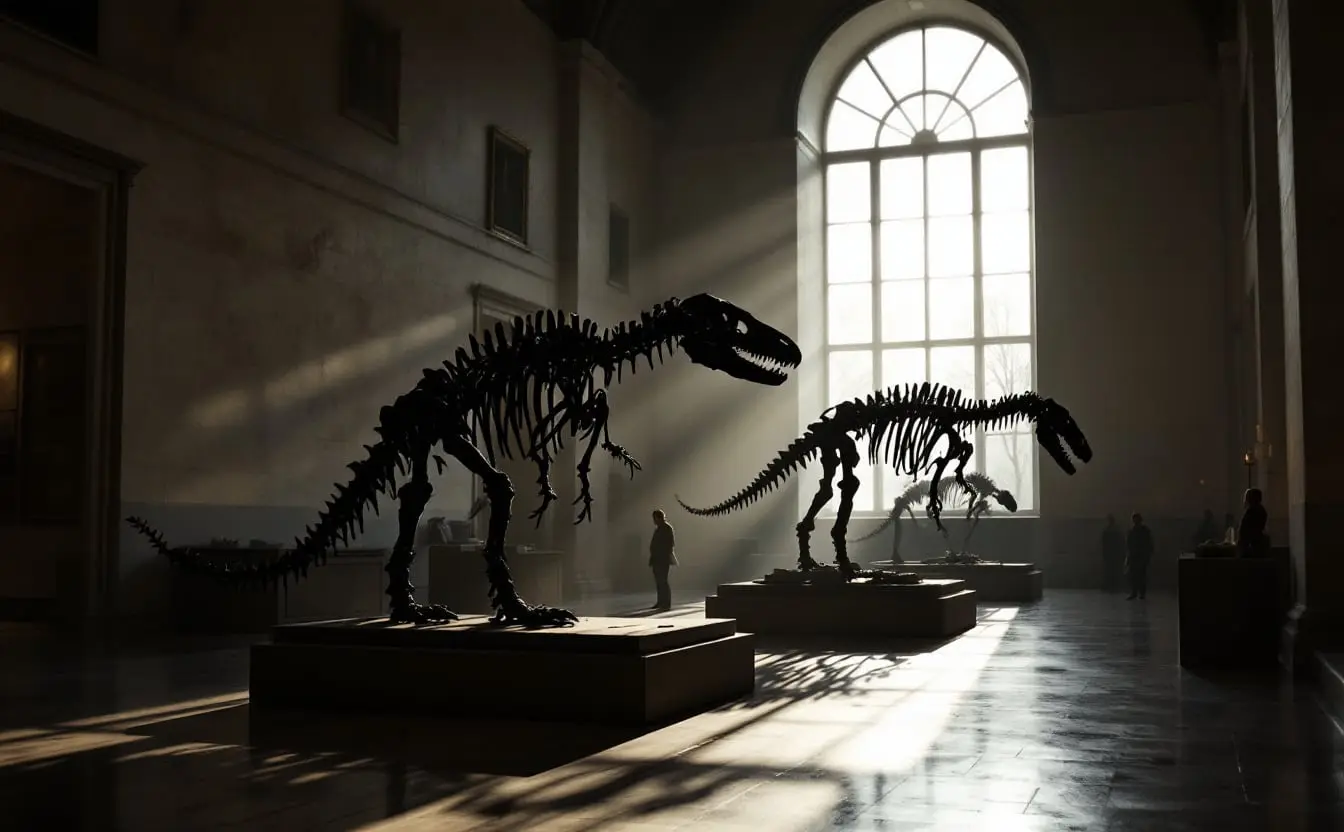
My favourite way to end a dinosaur night is the simplest one going, a trip to the nearest museum hall with real bones in it. Stand under a skeleton with the kid who has been bossing you around about sauropods all week, and ask which parts of last night's film were standing right there in front of you.