Filmmaking Craft / Documentary
What is B-roll, and how documentary editors use it
B-roll for documentary makers: where the term came from, A-roll versus B-roll, how editors cut with it, and the moment cover footage starts to mislead. Some links here are affiliate links. As an Amazon Associate I earn from qualifying purchases.
Every filmmaking workshop I have helped run has the same moment. About forty minutes in, someone near the back raises a hand, a little sheepish, and asks what B-roll actually is. Half the room exhales. They had all been nodding along, and plenty of them were wondering too.
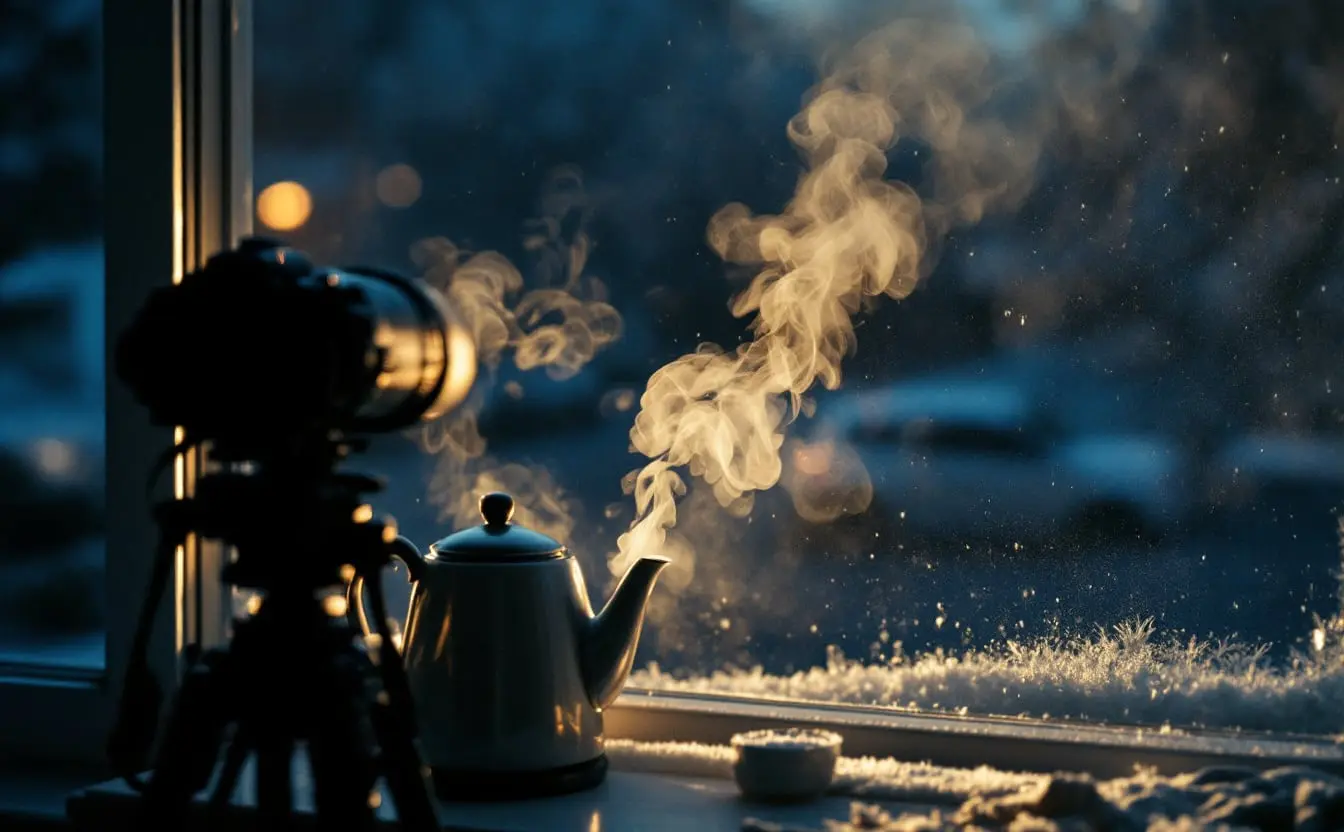
So here it is, said out loud with no eye-rolling. B-roll is the footage you cut to while the main thing carries on. In a documentary the main thing is usually a person talking or an event unfolding, and the B-roll is the hands, the street, the kettle, the empty classroom, the photograph on the fridge. It sounds like the least glamorous part of the job. It is also where a surprising amount of a film's rhythm, sense of place and honesty get decided, usually by an editor at two in the morning with cold coffee.
Where the term B-roll comes from
The name is older than video. When films were cut on actual film, shots could be split across two rolls of picture, an A roll and a B roll, with black leader filling the gaps on each. The lab printed both rolls onto the same stock, one after the other. Where a shot on one roll overlapped a shot on the other, the lab could fade one out while fading the next one in. That is how a dissolve got made without visible splices on screen.
So for a long time the B roll was a lab and editing matter, with nothing to say about what was in the shots. The meaning drifted as the work moved to tape and then to files. Today, when someone on a documentary says A-roll, they usually mean the main interview or the central action, and B-roll means the supporting shots laid over or between it. Nobody needs a negative cutter for this any more. The words stuck anyway, the way we still say a camera is rolling when nothing in it rolls.
A roll vs B roll in a real film
Picture a short portrait of a baker who opens her shop at four in the morning. Here is how the footage would sort itself.
| A-roll | B-roll | |
|---|---|---|
| What it is | The sit-down interview, or the scene the film is built on | Shots that support, illustrate or link what the A-roll says |
| In the baker film | Her talking about thirty years of early starts | Flour on the bench, the oven door, the dark street, coins on the counter |
| Sound | Usually the sound you keep | Its own natural sound, or laid quietly under the interview |
| Who leads | The speaker or the event | The editor, choosing what to show while the A-roll plays |
The split is useful, not sacred. In an observational film with no interviews, the scenes themselves are the A-roll, and a shot that would be mere cover in a talking-head film might be the whole point. Some of the films I love most blur the line on purpose. Still, if you are new, thinking in A and B will make your shoot days calmer and your edit faster.
What B-roll footage is for: cover, rhythm and context
Editors use B-roll for three jobs. It helps to know which one a shot is doing before you go and get it.
Cover
An interview answer almost never arrives in usable shape. People start a sentence, wander, come back, say "um" in a lovely regional accent. When an editor trims that answer, the picture jumps: the head twitches from one position to another. Laying a shot of the baker's hands over the join hides the jump. This is the oldest use of B-roll, and it is why documentary crews still call it cover.
Covering a cut is normal practice. The ethics sit in what the trimmed answer now means, not in the fact that you hid the seam. Teodora Vlahos's piece on finding the story in 200 hours of footage is good on keeping cut-down speech faithful to what was said.
Rhythm
A film made only of people talking can feel like being stuck in a lift with a podcast. B-roll gives the audience room to breathe. A long shot of the street after a hard answer lets the line land. A run of quick details can lift the pace before a scene change, and composers love a good stretch of it, because it gives the music somewhere to go.
Context
B-roll tells you where you are and when. Before anyone mentions that the bakery sits on a street of shuttered shops, a slow pan can show you. Scale, season, weather, the colour of the light in a prairie January: supporting shots carry all of that long before a speaker gets round to it.
When B-roll implies something it does not show
Here is the part workshops skip. Because B-roll plays under someone's words, viewers assume it shows the thing being described. That assumption is the source of most of the quiet dishonesty in documentary.
A woman describes the flood that filled her basement. The editor has no footage of it, so she cuts to dramatic archive of a different flood, in a different city, from a different decade. Nobody says it is her flood. Everyone watching believes it is. Or a narrator talks about addiction over a slow shot of real people waiting at a bus stop, people who agreed to nothing and are now, in the mind of every viewer, the addicts in the story.
Illustrative footage is not forbidden. It has to be honest about being illustrative. My rules of thumb:
- If a shot could be mistaken for the real event, label it on screen or leave it out.
- Prefer details that make no claim, like a kettle or a hand on a railing, over shots that seem to show the very thing described.
- Never lay identifiable strangers under narration about crime, illness or poverty.
- Write narration that does not lean on the picture to say what you cannot prove.
When I watch someone else's film, this is the first thing I check. It sits close to the heart of Claire Archambault's questions for watching a documentary critically, which has a whole section on noticing reconstruction and whether anyone told you.
How to shoot a B-roll list
Good B-roll is planned, not scavenged in the last hour of a shoot when the light has gone grey. Make a list. Then shoot most of it after the interview, because the interview tells you what you actually need.
- Write down every object, place and action your subject mentions. If she talks about her mother's recipe card, you want the card.
- Get the place at more than one time of day. Morning and evening shots of the same corner hand an editor transitions for free.
- Shoot each action wide, medium and close: the room, then the bench, then the hands in the dough.
- Hold every shot for at least ten seconds, and start rolling before the movement begins. Editors need handles.
- Record natural sound with everything. A silent shot of an oven is half a shot.
- Add a few movement shots that can bridge scenes, such as a door opening, a walk down a corridor or a car pulling away.
- Grab the textures you did not plan: steam, a cracked tile, a cat who wandered in. They end up in the film more often than you would guess.
All of that eats card space faster than interviews do. The video file size calculator in the Kit Room will tell you how much room a morning of B-roll needs at your camera's settings, before you find out the hard way in a parking lot.
Archive as B-roll
Old footage and photographs make some of the strongest B-roll a documentary can have: home movies, local news, a family's slides of a lake that has since been drained. They carry the same risk as anything else laid under words, with history added on top. An archive shot of some factory in the seventies, placed under a story about one particular factory, will be read as that factory.
Date and place archive on screen when it matters, and keep a log of exactly where each clip came from. Archive also brings rights questions that a kettle shot never will. Teodora's plain guide to archive footage and rights covers licences, fair dealing and the clearance log, and it is worth reading before you fall for a clip you cannot afford.
Free B-roll footage and stock libraries
Stock libraries exist, and some offer clips for free under their own licences. They can rescue a scene, especially a transition or a skyline you have no budget to travel to. Read the licence every time: whether it allows commercial and broadcast use, whether credit is required, and whether the people visible in the shot signed releases.
Then ask whether you want it at all. Stock tends to look like stock, and audiences have seen the same sunrise over the same glass towers in a hundred corporate videos. It also brings the illustrative problem with it, since strangers who never met your subject end up standing in for her life. My bias, for what it is worth: ten seconds you shot yourself on your own street will usually beat a minute of beautiful strangers.
Questions
What does B-roll mean?
B-roll means the supporting footage in a film: shots laid over or between the main interview or action to cover cuts, set the scene and give the edit rhythm. The term began in film editing and printing, where shots were split across an A roll and a B roll so a lab could make dissolves without visible splices.
What is the difference between A-roll and B-roll?
A-roll is the main material, usually the interview or the central scene, and its sound normally carries the film. B-roll is everything that supports it: details, places, actions and archive shown while the A-roll plays.
Is B-roll the same as stock footage?
No. Stock footage is material someone else shot and licenses to you. It can be used as B-roll, but most good documentary B-roll is shot by the crew for that film, around the real people and places in it.
How much B-roll should I shoot?
More than feels reasonable, and with a purpose. A good habit is to come home with several shots, in more than one size, of every person, object and place mentioned in the interview, each held long enough to cut.
Where can I find free B-roll footage?
Several stock libraries offer free clips under their own licences. Check that the licence covers your use, whether credit is required and whether people in the shot signed releases, and label anything that could be mistaken for the real event.