Editing a documentary: finding the story in 200 hours of footage
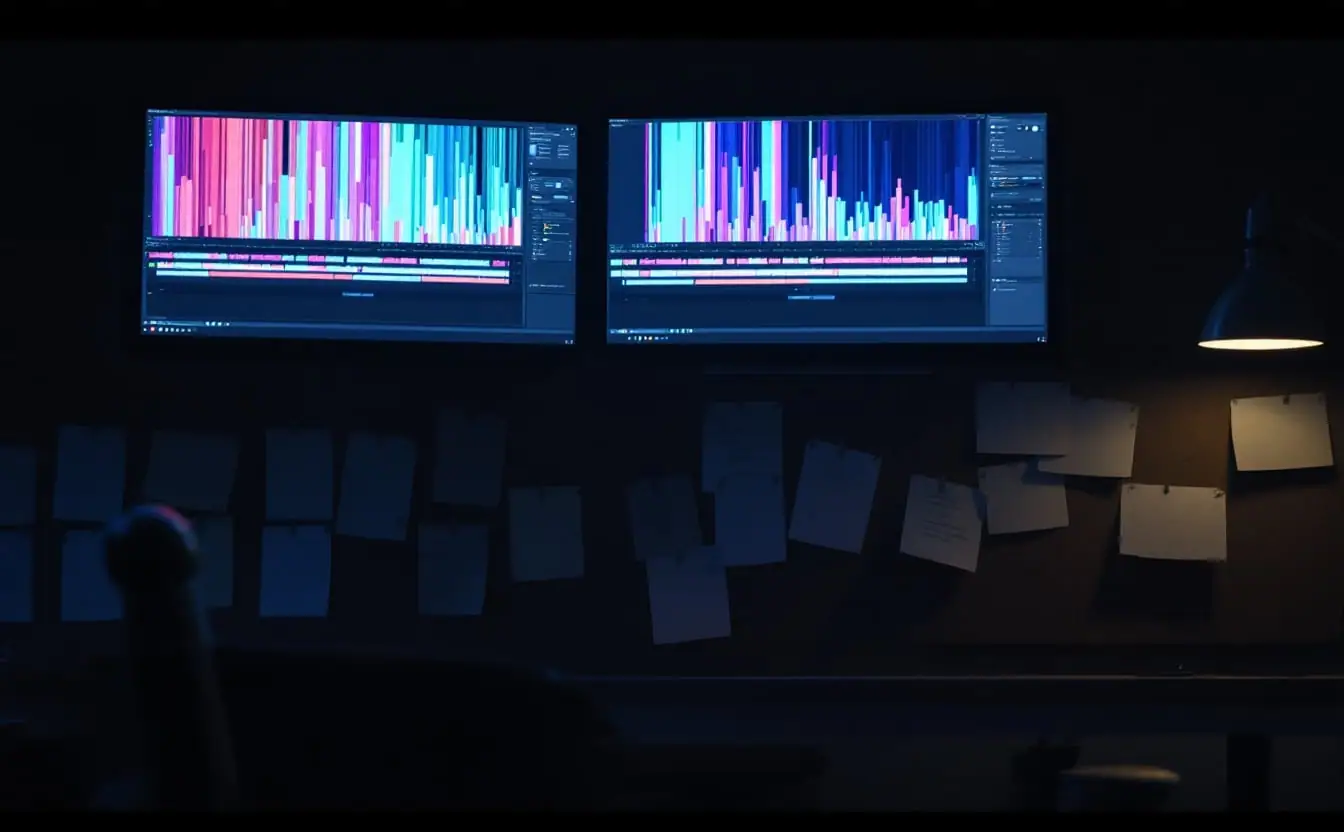
The first time I faced 200 hours of footage, I did what everyone does. I started at the beginning and watched. Four days later I was somewhere around hour thirty, with pages of notes I could not search and a creeping sense that the film was in there but would never come out.
It came out, eventually, and the method that got it out is the subject of this piece. Two hundred hours cut down to a 90-minute film means keeping about one minute in every 133. Ratios like that are common in observational work. The job of the edit is not to use the footage, though. It is to find out what the footage means.
Know what you have
Before you cut anything, you need to be able to find anything. Log every clip: who, where, what happens, and anything striking, with timecode. It is dull work, and it is the work that makes everything after it possible. If an assistant does the logging, sit beside them for the first day so the log uses your vocabulary and not theirs.
Transcribe every interview and every scene where people talk. Machine transcription is quick and cheap enough now that there is no excuse to skip it, but it mishears names, places and accents, so check any passage you plan to use against the audio. A searchable transcript turns "I think she said something about her father in the second interview" into a ten-second search.
The quality of the shoot shows up here, in ways a director rarely sees until the edit. A second camera angle lets you shorten an answer cleanly. Good room tone smooths the cut. Consistent light lets minute ten sit beside minute fifty. The guide to shooting documentary interviews covers that end of the pipe, and every hour spent there saves several in the cutting room.
Selects, then string-outs
Selects are the moments worth keeping: answers that land, scenes that play, shots that carry feeling. Pull them into their own sequences, one per shoot day or per character, and be generous at first. A select that seems minor in week one may hold the film together in week eight.
From selects, build string-outs. These are long, rough sequences grouped by theme, character or event, with no attempt at polish. Every scene with the grandmother in one place. Every answer about leaving home in another. Watching a string-out, you start to see what the footage actually says, as opposed to what you hoped it would say when you shot it.
The paper edit and the wall
At some point, step away from the timeline. Print the transcripts of your selects, mark them up with a pen, and build a paper edit: a document that orders the strongest moments into a draft structure. It is fast and cheap to change. It also lets director and editor argue about story without the hypnotic pull of pictures.
Then take it to the wall. One index card per scene or idea, one colour per character or thread, pinned in order across a board. Cards move in seconds, and you can see the whole film at once, gaps included. I once watched a structural knot that had resisted a month of timeline work come loose in an afternoon of moving cards around.
The three-hour assembly
The first assembly will be long. Three hours for a film headed to ninety minutes is ordinary, and longer is fine. Do not panic, and do not show it to anyone who will judge the film by it.
The assembly exists to put everything you believe matters in order, so you can see what you have. Watch it in one sitting with a notepad and no keyboard. Mark where your attention drifted, where you felt something, and where you were confused. Those three lists are your next month of work.
Find the spine
Every documentary that works has a spine, a question the film keeps asking or a line of change it follows: will she get her children back, what happened on that street, who did the girl in the photograph become. Find yours, write it on a card above the wall, and test every scene against it. A scene can be beautiful and still not belong, and a plain scene can turn out to be the most important thing in the film.
The spine is often not the one you planned. On a small community film I cut in East Vancouver, the pitch was about a building, and the footage turned out to be about two neighbours who had stopped speaking to each other. The building stayed as the setting. The film became theirs.
Three ways to build it
Chronological structure follows events in the order they happened. It suits observational films, it is easy to follow, and its danger is a sagging middle when life declines to supply drama. When a film has to span decades, as any film about Kim Phuc's life after the 1972 photograph must (the note on Kim's Story looks at one), chronology gives the audience solid ground while time moves underneath them.
A braided structure runs two or more threads in parallel and cuts between them: two characters, past and present, or a present-day search with an archive story beneath it. Braids give you contrast and pace. Each thread has to be strong enough to stand alone, though, or the audience will feel the weaker one as a delay.
The essay film is shaped by an argument or a voice, often the filmmaker's own, and the footage answers to the thinking. It frees you from chronology and puts enormous weight on the writing, since a weak narration exposes itself within minutes. Most films end up mixing modes. Pick a dominant one and let the others visit.
The ethics of the cut
Editing is compression. You will turn a year into an hour, three conversations into one scene, a slow change of heart into a single turn. All of that is legitimate as long as the result stays true to what happened and to what people meant. Ask of every edit whether the person on screen would recognize themselves, and their words, in it.
Frankenbiting is where the line gets crossed. The term comes from reality television, and it describes splicing words from different answers, sometimes different days, into a sentence the person never said. It is easy, often invisible, and dishonest. Trimming an "um" or a digression from within an answer is ordinary; building a new claim out of fragments is not. If the film needs a sentence nobody said, go back and ask, or find another way to make the point.
Music deserves the same suspicion. A score can tell the audience how to feel about someone before they have formed their own view: menace under a politician's walk, sorrow under a grandmother's silence. Sometimes that is the film's honest point of view. More often it is a shortcut papering over a scene that does not work.
My rule is to play every key scene without music first. If it holds, music can deepen it. If it does not, music will only disguise the problem, and an attentive viewer will feel the push; the guide on how to watch a documentary critically is a useful check from the audience's side of the screen.
Test screenings
Show the film before it is finished, and not only to friends. Six to ten people in a room, some of whom know nothing about the subject, will teach you more in one evening than another month of watching alone. Do not ask whether they liked it. Ask what the film was about, who they cared about, where they got lost and what they remember.
If three people describe a different film from the one you think you made, believe them. Sit behind the audience and watch the backs of their heads, because you will feel every moment the room leans in or settles back. Take notes during the screening and say almost nothing afterwards except thank you.
Working with the director
The editor's job is to be the first audience, the one person in the process who was not there when it was shot. Directors carry every shoot day with them: how hard a scene was to get, how fond they are of a person, what a trip cost. The editor sees only what is on the screen. Protect that distance, say what you see plainly, and expect pushback, because the best cutting rooms argue a great deal and take each other seriously.
Questions editors get asked
How long does a feature documentary edit take?
Months rather than weeks, for this much footage. The assembly takes longer than anyone budgets, and the fine cut takes longer than the assembly. Build in time for at least two rounds of test screenings.
Should the director cut their own film?
Some do it well. Most films benefit from a separate editor for the reason above: someone who arrives without the memory of the shoot and judges only the material.
What if the story I shot is not in the footage?
Then the footage is telling you about a different story, and that one is usually better. Go back to the string-outs and look for whatever keeps recurring without being invited.
Is it ever acceptable to reorder events?
Small reordering for clarity is routine. Reordering that changes cause and effect, or what someone knew and when, is not. When in doubt, ask whether the person in the film would object if they saw it.
Picture lock
Picture lock means the cut stops changing, so sound, colour, music, graphics and archive clearances can be finished against a fixed timeline. Lock is a decision rather than a feeling, and there will always be something you would still change. Lock when the test audience follows the film, the spine holds, and further changes are making it different rather than better.
On lock day, take the cards down from the wall in order and band them together with the date written on top. Keep the stack in a drawer. Years later, it is the clearest record you will have of how the film found its shape.