Film note
Kim's Story: The Road from Vietnam, and a life after the photograph
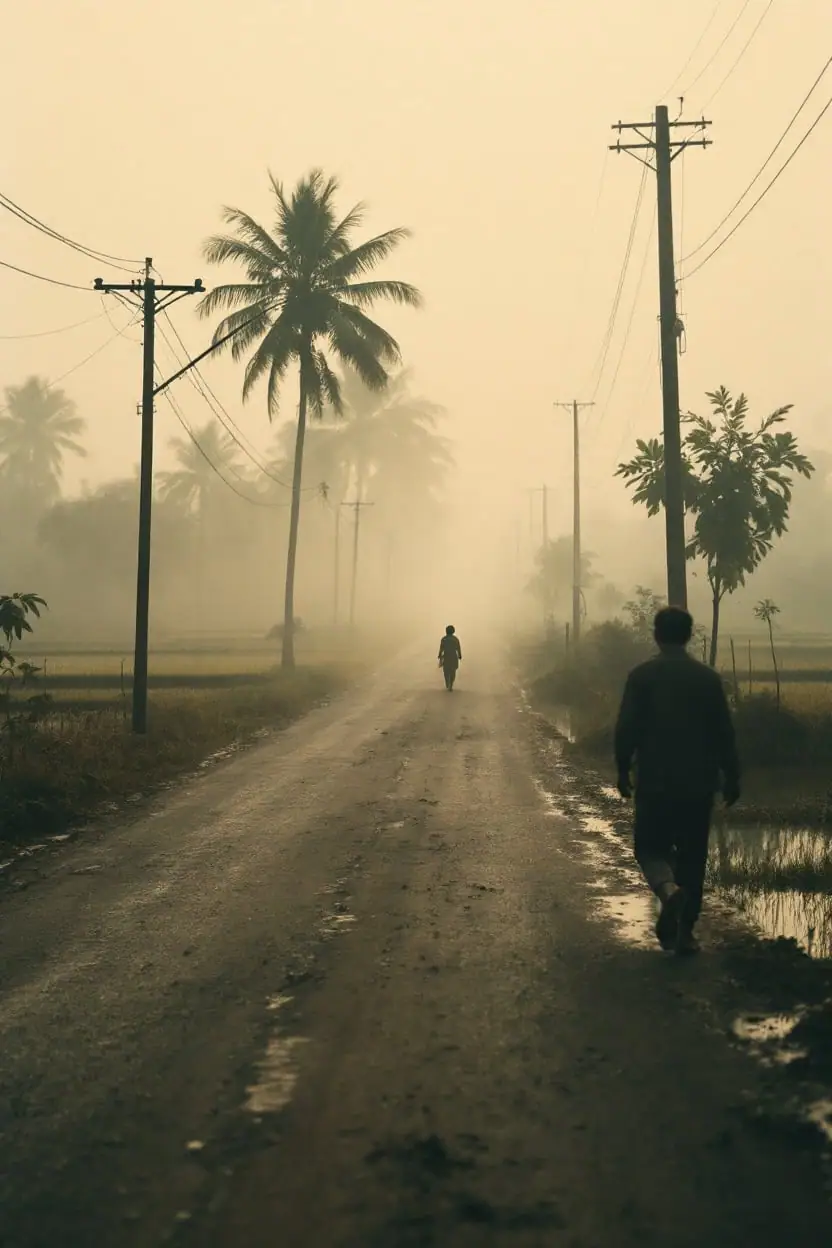
Shelley Saywell's 1997 documentary met Kim Phuc a quarter century after the picture that fixed her at nine years old. It remains a careful study of what happens to a person once an image becomes history.
Most people who know the name Kim Phuc learned her face first, and the face they learned belonged to a nine-year-old. The photograph made near Trang Bang on 8 June 1972 was on front pages within days, won a Pulitzer the following spring and settled into school textbooks as shorthand for an entire war. The girl in it went on growing up. By the time Shelley Saywell made Kim's Story: The Road from Vietnam in 1997, Kim Phuc was a woman in her thirties living in the Toronto area, and the picture had become something she lived alongside rather than something that had simply happened to her.
Saywell's documentary runs about an hour. It was made for Canadian educational broadcasters, TVOntario among them, and it carries the habits of that tradition: patience, plain exposition, no hurry to arrive at a lesson. When the Toronto Star reviewed it, the paper admired how carefully and simply the story was told, and suggested that by the end Kim had grown beyond the iconic image. Nearly thirty years later, that second claim is the one worth testing.
The picture before the person
The facts of the morning are well documented and need no decoration. After a South Vietnamese air force napalm strike near the village, children ran down the road toward a group of journalists. One of them was a badly burned nine-year-old girl. Associated Press photographer Nick Ut, born Huynh Cong Ut, has been credited for decades with the frame the agency titled "The Terror of War", and he took the children to hospital. Television crews filmed the same minutes, which is why later documentaries could work with moving pictures instead of a single stopped instant.
Then came an argument inside the AP. The child was naked, and editors debated whether the picture could run at all. It ran. In 1973 it won the Pulitzer Prize for Spot News Photography, and it was also named World Press Photo of the Year.
For a generation of North American readers, that single frame became the Vietnam War in miniature. That compression is exactly what Saywell's film pushes against. An icon is useful to almost everyone except the person inside it. It turns one specific morning into a symbol, and a symbol has no surgeons, no months on a hospital ward, no adolescence and no opinions of its own.
What the film is made from
Saywell works with a short list of materials, and it helps to know them going in, because the restraint is the method. There are four main elements:
- the June 1972 news footage, the television record of a wounded girl running toward the journalists who then helped her;
- interviews with doctors and journalists who had a hand in keeping her alive, recorded a quarter century after the fact;
- Kim Phuc herself in the mid 1990s, an adult speaking in her own voice;
- a journey to Washington, D.C., to the Vietnam Veterans Memorial for the Veterans Day ceremony of November 1996.
Going back to the doctors and the journalists is the film's quiet intelligence. The famous frame stops at the moment before help arrives. The people who treated and carried her know the part the photograph leaves out, which is the long and unglamorous work of keeping a child alive. Giving them the floor moves the weight of the story from injury to care, and that move is a moral position as much as a structural one.
Using the 1972 footage at all carries weight of a different kind. Moving images of a hurt child are harder to sit through than a still, and any filmmaker who licenses them has to decide how much to show and how often to come back to it. That question hangs over every film about Trang Bang, and viewers are entitled to ask it. The business side of such material, from who holds the rights to what a licence actually covers, is laid out in the guide to archive footage and rights.
Havana, Gander, Ajax
The film arrives at a particular point in Kim Phuc's life, and the timing explains much of its tone. After 1972 she spent months in hospital and went through many operations. As a young adult she studied in Cuba. In 1992, she and her husband were flying from Moscow to Havana when the plane stopped to refuel at Gander, Newfoundland; they left the aircraft during the stop and asked for asylum in Canada. She settled in the Toronto area, in Ajax, Ontario.
So the woman Saywell filmed had lived in Canada for only a few years. She was no longer a figure in someone else's war but a Toronto-area resident with a past that strangers recognized on sight. A Canadian documentary about her was, in a modest way, a film about a neighbour. That proximity is worth keeping in mind. Much Vietnam material adopts the foreign-correspondent posture, the reporter flying in to explain a distant country to viewers at home, and a film about someone living up the highway starts from a different place.
There is also a quiet irony in the geography. A child photographed on a road in southern Vietnam became, twenty years later, an asylum seeker leaving a plane at a refuelling stop in Newfoundland. No filmmaker would have needed to underline that arc for a Canadian audience in 1997. It was already part of the story's charge, and it is part of why the film feels addressed to viewers who shared a province, and a winter, with its subject.
The Wall, November 1996
The film's destination is the Vietnam Veterans Memorial in Washington, the long wall of black granite cut with the names of Americans who died in the war. Saywell follows Kim Phuc there for the Veterans Day ceremony of November 1996, where she addressed a gathering on a day set aside for those who had served. Her subject was forgiveness.
It is a hard passage to write about without tipping into sentiment or suspicion, and both responses are available. One reading says the occasion offered American veterans a kind of absolution from a Vietnamese civilian, which is a great deal to ask of any one person. Another says Kim Phuc chose the setting and the message herself, as an adult with convictions of her own, and that treating her forgiveness as a script handed to her is its own form of condescension. The fairer way to watch is to take her at her word while keeping the setting in view, since a national memorial is never a neutral room.
Forgiveness then became the through line of her public life. She was named a UNESCO Goodwill Ambassador in 1997, the year of the film, and she founded the Kim Foundation International to help child victims of war. Seen from here, the Washington trip looks less like a climax than a beginning: an early and very public statement of a position she would keep for decades.
One life, told several ways
Kim's Story is one telling among several, and its place in the sequence explains a lot about it. The table sets out the main public versions in order of appearance.
| Year | Telling | Whose account | What it adds |
|---|---|---|---|
| 1972 | "The Terror of War" and television news footage | Photojournalists and wire editors | The moment itself, fixed as evidence |
| 1997 | Kim's Story: The Road from Vietnam | Shelley Saywell, with Kim Phuc taking part | The doctors and journalists; the adult woman; forgiveness at the Wall |
| 1999 | The Girl in the Picture | Denise Chong, biographer | A full-length biography, with the war and its aftermath as context |
| 2017 | Fire Road | Kim Phuc, memoir | Her own account, including her faith, in her own words |
| 2025 | The Stringer and the attribution dispute | Filmmakers, the AP, World Press Photo | A quarrel over who made the picture, not over what it shows |
Read down the right-hand column and a pattern appears, at least until 2025. Each new telling gives Kim Phuc more room and the photograph less. Saywell's film is the hinge, the point where the girl in the picture is treated as an adult with a present tense, and the people around the event are treated as witnesses rather than scenery.
The 2025 entry is the strange one. The Stringer, which premiered at the Sundance Film Festival in January 2025, argued that a freelance stringer, Nguyen Thanh Nghe, made the photograph rather than Nick Ut. In May 2025 World Press Photo suspended its attribution of the image to Ut pending further evidence, while the AP published its own investigation and continued to credit Ut, who has denied the claim. The dispute is unresolved.
It concerns who pressed the shutter, not what happened to the child, and it leaves the substance of Saywell's film untouched. It does make the photograph an unusually good subject for teaching, which is how the classroom guide to the Trang Bang image approaches it. For students of documentary, the irony is hard to miss: a picture long treated as the plainest kind of evidence turned out to have a contested chain of authorship of its own.
Watching it now
Kim's Story has aged the way good educational documentaries tend to. The format places it firmly in late 1990s broadcast television, but the argument has not dated. It suits senior high school and university classes, film societies with an interest in war and memory, and anyone who knows the photograph and has never asked what came next. Viewers arriving from wider surveys, such as the essay on documentaries about childhood and conflict, will find it a compact example of a film that refuses to let a child remain only a victim.
A practical suggestion for anyone programming it: pair it with a reading rather than another film. Chong's biography or Fire Road gives the hour a longer echo, and lets an audience spend longer with her own account than a broadcast hour allows. If the 1972 footage is a concern for a younger room, say so plainly beforehand. An audience prepared for the archival material will be free to attend to everything else, and everything else is where the film's value lies.
The Wall in Washington is polished so that visitors see their own reflections laid over the names. It is a fitting last stop for a documentary that spends an hour moving its subject out of a photograph and into a life, where she can finally be seen standing in the present.