Hurricane Katrina documentaries: the films that stayed with New Orleans
The Hurricane Katrina documentary films that matter, from Spike Lee's four-act requiem to Trouble the Water, and how to watch them with the care they ask. Some links here are affiliate links. As an Amazon Associate I earn from qualifying purchases.
In this piece (8 parts)
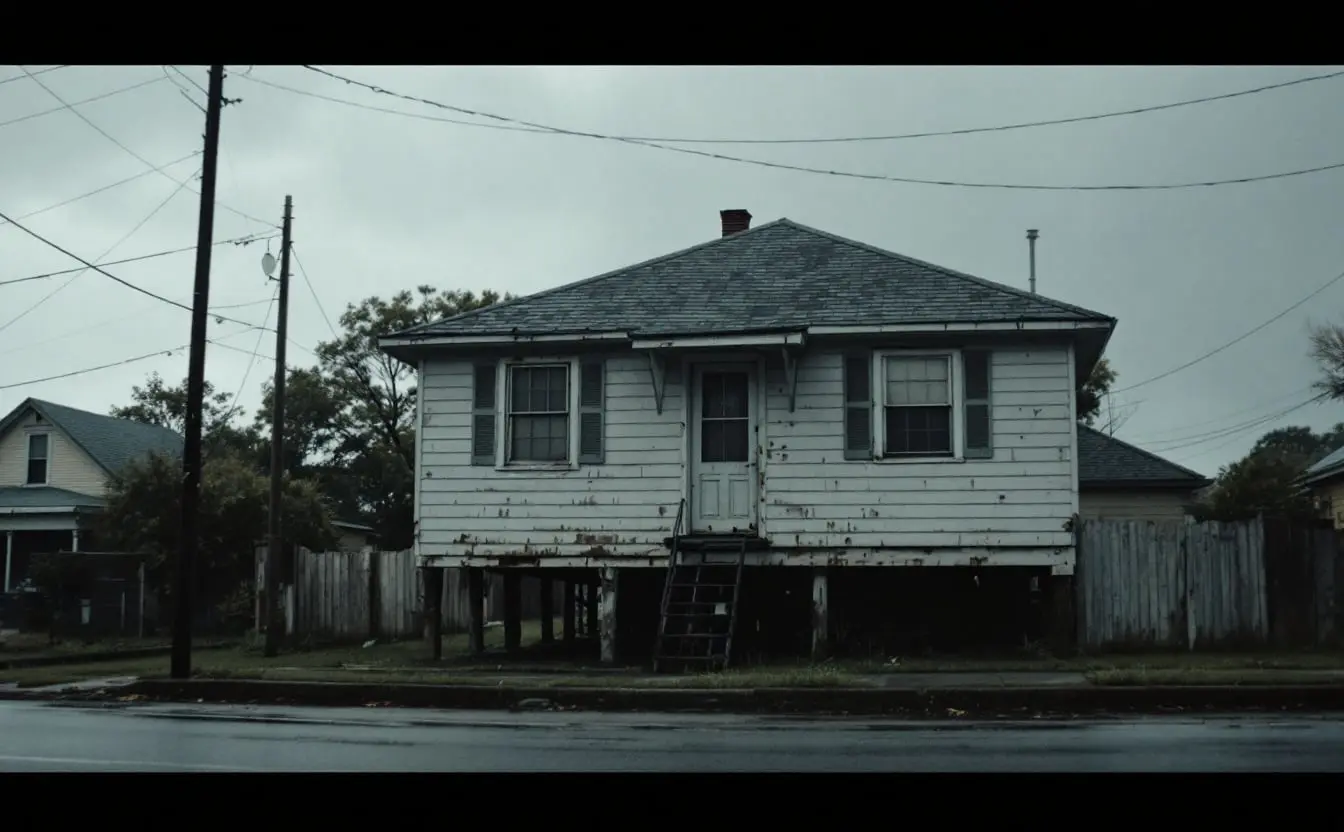
The pictures most people kept from the end of August 2005 came from news helicopters: water up to the eaves, whole neighbourhoods seen from above, a city turned into a map. The best Hurricane Katrina documentary work went down to street level and stayed there, in some cases for years. These are films about a storm only in part. Mostly they are about what happened after the levees failed, and about who was left waiting when the systems built to protect people did not.
There are three films I would put in front of anyone, two of them by the same director, and one book I would set beside them. Here is what each one does, how they differ, and how to watch them without turning a city's worst weeks into an evening's spectacle.
What happened
Hurricane Katrina made landfall on the Gulf Coast on 29 August 2005. In New Orleans the worst damage came after the wind: levees and floodwalls failed, and water flooded most of the city. People who had no way to leave, or who stayed for reasons of health, money, work or family, were stranded for days in their homes, on highway overpasses and in shelters of last resort. Hospitals and nursing homes lost power. Much of the world watched it unfold on television, and the gap between what viewers could see and what the authorities seemed able to do became part of the story. Later investigations faulted the design and construction of the flood defences, which is why so many of these films are angry, and why their anger is aimed at institutions rather than at the weather.
When the Levees Broke: A Requiem in Four Acts (2006)
Spike Lee made this long film for HBO, in four parts, and it remains the fullest account of the disaster on screen. Its method is the chorus. Lee interviews residents and officials, engineers and musicians, people who left and people who stayed, and cuts them together with news footage of the period until the city seems to be telling its own story. The title is exact. It is a requiem, made to mourn and to name who failed.
Lee is not neutral and never pretends to be. His sympathies sit with the people who lived through it, and the film gives them room. As with any film built on testimony, some of what people say is memory and suspicion rather than established fact, and the film lets it stand as testimony. That is honest to how the days were lived. It also asks you to keep two kinds of truth apart: what someone experienced, and what can be shown to have happened. Our guide to watching a documentary critically has questions for exactly that.
Watch it one act per evening. It is too long, and too heavy, to take in at one sitting, and the pauses between acts help you think.
If God Is Willing and da Creek Don't Rise (2010)
Lee went back five years later, again for HBO, to ask what recovery had meant and for whom. Follow-ups like this are rare and valuable. Rebuilding is slow and undramatic, and by then most of the cameras had gone. The film's subject is the long tail of the disaster: who came home, who could not, and what kind of city was being rebuilt in their absence.
It is less overwhelming than the first film and, in some ways, sadder. Catastrophe has a shape. Recovery mostly does not, and Lee is patient enough to show that.
Trouble the Water (2008)
Trouble the Water, directed by Tia Lessin and Carl Deal, is built around home video shot by Kimberly Rivers Roberts, a resident of the Ninth Ward, as the storm arrived and the water rose through her neighbourhood. The directors met her after the storm and shaped her footage, together with their own, into a feature. It won the Grand Jury Prize for documentary at Sundance and was nominated for an Academy Award.
For me it is the most important of the three, because of whose camera it is. Roberts was filming her own street, her own neighbours, her own danger. The footage the directors shot afterwards is careful and humane, but the film's authority comes from the person who was there.
It also raises questions worth holding onto. How is credit shared when the decisive footage comes from a participant? Who decides what her material means once it is in someone else's edit? What does a production owe the person whose life it was? Our piece on consent, safety and anonymity when filming survivors takes up those obligations from the maker's side, and they apply here in full.
Comparing the Hurricane Katrina documentary films
| Film | Year | Made by | Built on | Watch it for |
|---|---|---|---|---|
| When the Levees Broke: A Requiem in Four Acts | 2006 | Spike Lee, for HBO | Interviews and news archive, in four parts | The full account and its anger |
| Trouble the Water | 2008 | Tia Lessin and Carl Deal | Home video by Kimberly Rivers Roberts, plus the directors' own footage | The flood from inside one neighbourhood |
| If God Is Willing and da Creek Don't Rise | 2010 | Spike Lee, for HBO | Return interviews, five years on | What recovery did and did not mean |
What these films leave out
New Orleans dominates the Katrina shelf, for understandable reasons: the levee failures were a man-made disaster inside a natural one, and the city's culture made it impossible to look away. But the storm also devastated the Mississippi coast, and towns there appear far less often in documentary than they deserve.
The other gap is time. Hundreds of thousands of people were scattered to Houston, Atlanta and cities across the country, and many built lives there and never came back. Their stories are mostly told in fragments, at the edges of films about the city they left. If you know of work that stays with them, it is worth seeking out at a festival or a community screening.
How to watch them
Start with Trouble the Water if you have only one evening. It is a single feature, it is intimate, and it shows the flood from the place the helicopter shots could not reach. Then take the Lee films in order, with time between them.
If you are showing any of these to students or younger viewers, watch them yourself first. Footage from those days can be very distressing, and these films do not soften it. Give context before you press play: where New Orleans sits, what a levee is for, who was able to leave and who was not. Afterwards, ask the question that runs under all three films: who was the system built for?
A few more questions work well after any of them:
- Whose voices does the film trust most, and whose does it treat with suspicion?
- Which images come from television news and which from people who lived there, and how does the film let you tell the difference?
- What does the film say caused the flooding, and how does it show you rather than simply assert it?
- Who is missing from the screen, and why might that be?
None of these has a single right answer. Asked honestly, they turn a screening into a conversation about responsibility, which is what these filmmakers wanted.
They also pair well with the Chernobyl documentaries I have written about. Different decades, different countries, different politics. Both are stories of institutions failing the people they were meant to protect, and both are told best by those people.
Reading alongside
Five Days at Memorial by Sheri Fink reports on what happened inside one New Orleans hospital after the storm, as the power failed and evacuation stalled, and on the decisions staff made about their patients. It grew out of reporting that won Fink a Pulitzer Prize. It is the book I would set beside these films, because it does what they mostly cannot: it reconstructs, in close detail, choices made out of sight of any camera. Its published reviews and that prize are the reasons it is here.
Then go back to Roberts's footage. Once you have seen the water rise from where she stood, the view from above never looks quite the same.