Guide
How a small Canadian documentary company works, from pitch to impact campaign
A great many Canadian documentaries come out of companies run by one or two people. Here is how those small outfits win commissions, stack licences, funds and tax credits, deliver a finished film and keep it working after broadcast.
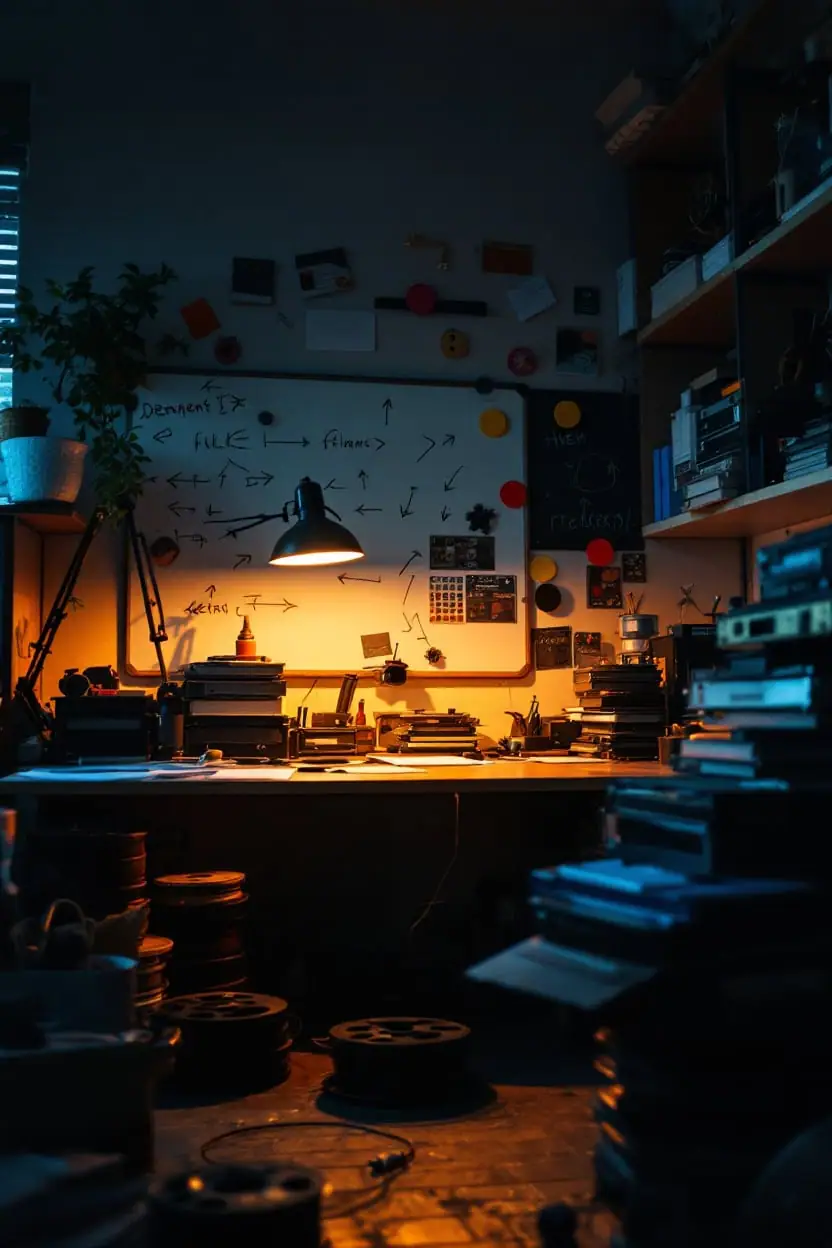
Picture the usual setup. Two desks in a converted storefront or a spare room, a shelf of labelled hard drives, and a whiteboard with five projects on it in five different states of hope. One is shooting, one is in the edit, one is waiting on a broadcaster's answer, and two are still a folder of research and a list of phone numbers. That is what a great many Canadian documentary companies look like inside, and it is a sound way to make films for decades.
The people at those desks are usually producer-directors. They come up with the ideas, raise the money, direct the shoots, sit in the edit and sign the delivery papers. Everyone else (camera operators, sound recordists, editors, researchers, composers, an accountant who understands tax credits) is hired per project.
A company built around rights, not payroll
The most valuable thing a small company owns is rarely its gear. It is the copyright in its films, plus the contracts that let it license those films to broadcasters, distributors and schools. A company with three good titles in its catalogue owns something that keeps earning, slowly, for years.
Many producers also set up a separate corporation for each production, which keeps one film's books, tax credit claims and bank loans apart from the others. The parent company holds the ideas and the relationships. Each single-purpose company holds one budget.
Development and the pitch
Development is the unpaid, or barely paid, part of the job. A producer-director reads, calls people, takes a camera out for a day or two and turns all of it into a treatment: a few pages on the story, the characters, the access and why the film matters now. A short teaser cut from that test footage often does more work than the document.
The pitch goes to commissioning editors at broadcasters: CBC and Radio-Canada, TVO, Knowledge Network, Télé-Québec and the specialty channels. Each has its own tastes, slot lengths and audience, and a good pitch is written for one of them at a time. Pitch forums at festivals, such as the one Hot Docs runs in Toronto, stage a public version of the same conversation, with an audience and a timer.
Rejection is the normal result. Companies that last keep several projects in development at once, so that one rejection never empties the whole year.
What a broadcaster licence actually buys
When a broadcaster says yes, it usually does not buy the film. It buys a licence: the right to show it for a set period, in a set territory, on agreed platforms. The producer keeps the copyright and the right to sell everything else, from foreign broadcast to educational streaming. The licence fee is real money, but for most documentaries it covers only part of the budget.
Its bigger value is what it triggers. A licence from an eligible Canadian broadcaster is usually the condition for support from the Canada Media Fund, which pays for Canadian television and digital production with money from cable and satellite distributors and the federal government. Much of that money is allocated through envelopes assigned to broadcasters, so in practice the broadcaster decides whether CMF support is on the table. The numbers for a single one-hour are laid out in What a licence fee buys.
The terms matter as much as the fee: the number of runs, the length of the term, which platforms count, any share of other sales. A producer who signs away online rights for too long can find a good film stranded.
Tax credits, and why CAVCO comes first
The federal Canadian Film or Video Production Tax Credit is run jointly by the Canada Revenue Agency and the Canadian Audio-Visual Certification Office (CAVCO), which is part of Canadian Heritage. Under the long-standing rule, the credit is 25 per cent of qualified Canadian labour, and the labour that counts is capped so the credit can never exceed 15 per cent of the production cost. It is refundable, so a small company with no taxable profit still receives it as cash.
To claim it, the production has to be certified as Canadian. CAVCO looks at who controls the production, who holds the key creative roles, where the money is spent and who owns the copyright. That last point is why producers guard their ownership: handing the copyright to someone else can cost the credit.
Provinces run their own labour-based credits on top of the federal one. Ontario's is administered by Ontario Creates; Quebec, British Columbia and other provinces run theirs through their own agencies, with their own residency rules and rates. Stacked together, federal and provincial credits are often among the largest pieces of a documentary's financing.
The catch is timing. Credits are paid after the film is finished and the claims are processed, which can take many months. Producers bridge the gap with interim financing from lenders who advance money against the expected credits, and the interest and legal costs of that loan go into the budget.
The rest of the stack
Few documentaries close on a licence, the CMF and tax credits alone. The rest is a patchwork that depends on the kind of film.
Feature documentaries made for theatrical release can apply to Telefilm Canada, which supports feature films. Personal or experimental work may suit the Canada Council for the Arts or a provincial arts council. Private funds such as the Bell Fund and those run by Hot Docs add smaller sums on their own deadlines. Presales to foreign broadcasters and international co-productions under Canada's treaties can bring in money and a partner, at the price of more paperwork and more people with opinions on the cut.
Then there is the producer's own contribution, usually part of their own fee, deferred to close the budget. That is generous and a little dangerous, because deferred fees come out of future revenue, and for many documentaries future revenue is modest. Funders revise their guidelines, so the table below sticks to the part each source plays.
| Source | Typical place in the budget | What it depends on |
|---|---|---|
| Broadcaster licence fee(s) | The anchor; meaningful, but rarely most of the budget | A commissioning editor's yes; slot, length and platform terms |
| Canada Media Fund | Often one of the largest pieces | An eligible Canadian broadcaster licence; CMF program rules |
| Federal tax credit (CPTC) | A capped share of cost, set by formula | CAVCO certification; Canadian labour; Canadian ownership |
| Provincial tax credit | Varies by province; sometimes larger than the federal credit | Provincial residency and spending rules |
| Telefilm, arts councils, private funds | Smaller top-ups, film by film | Type of film (theatrical, artist-led, digital); deadlines |
| Presales and co-production partners | Occasional; larger on international stories | Foreign interest; treaty rules |
| Producer deferrals | The last pieces that close the gap | The producer's willingness to wait |
Delivery is a project of its own
A finished cut is not a finished film. Broadcasters and distributors pay their final instalments on delivery, and delivery means a long list of materials, each checked by someone whose job is to find what is missing.
The usual list includes the broadcast master and textless versions, closed captions, described video for viewers who are blind or partially sighted, separate music and effects tracks for foreign versions, music cue sheets, a clearances log covering every piece of music, archive and artwork in the film, and the chain of title documents that prove the company owns what it is selling. Most broadcasters also require errors and omissions insurance, usually called E&O, which covers claims such as defamation, invasion of privacy or copyright infringement. Insurers want to see a lawyer's review and proper clearances, so legal review and insurance are really one process.
Leaving all this to the end costs stress and money. The habits in the guide to background research turn delivery into a week of checking instead of a month of chasing signatures.
After broadcast: schools, libraries and the long tail
Broadcast is often where a film earns its first money and finds its largest audience, but much of its life comes afterwards, through festivals, international sales and streaming, in an order that matters. After the premiere follows that longer life.
For small Canadian companies, educational and library sales are often the steadiest income after the licence. Universities, colleges, school boards and public libraries buy public performance rights and, increasingly, digital licences that let students stream a film through a campus system. A documentary about a social issue, a period of history or a particular community can stay on course lists for years. Study guides help, as do shorter classroom cuts that fit a single period.
Impact campaigns, with one worked example
An impact campaign is the planned work of putting a film in front of people who can act on its subject: advocates, service providers, policy makers, community groups. It usually means partner organizations, community screenings with discussion, a website with resources, and a clear ask that viewers can follow. Some campaigns have their own funding. Many run on the producer's spare evenings.
Lowdown Tracks, a 2015 feature documentary directed by Shelley Saywell and made in collaboration with the singer and activist Lorraine Segato of The Parachute Club, shows how a campaign can grow out of a film's own material. The film follows street musicians in Toronto who are homeless or living on the margins, and its songs were recorded where those musicians live and play: on streets, under bridges, in shelters. It premiered at Hot Docs in 2015, where audiences took to it warmly.
Its broadcast premiere came on TVO in November 2015, and the team tied that release to the Canadian Alliance to End Homelessness and its 20,000 Homes campaign, which launched the same month. The timing gave viewers somewhere to go after the credits: a national effort with a name and a goal. A separate website carried more of the music and an impact project, so the songs kept circulating apart from the broadcast. What makes the example useful is how simple it is. One strong partner, a release lined up with that partner's own launch, and material the audience wanted more of.
A lifecycle, start to finish
In practice the stages overlap, and a small company has several films at different points at once.
- Idea and research: reading, calls, early access, a first sense of who could carry the film.
- Development: treatment, test shoot, teaser, a first budget and a financing plan on paper.
- Pitch: meetings with commissioning editors, pitch forums, revised treatments, often over many months.
- Licence and financing: broadcaster agreement, CMF and fund applications, tax credit planning, interim financing.
- Production: shoots, interviews, archive research and licensing, with a running clearances log.
- Post-production: edit, broadcaster screenings of rough and fine cuts, music, mix, colour, captions, described video.
- Delivery: masters, paperwork, legal review, E&O insurance, the final payment from the broadcaster.
- Premiere and broadcast: a festival launch if there is one, then broadcast, with the impact campaign timed to both.
- The long tail: educational and library sales, international sales, streaming, tax credit claims, audits and, eventually, the deferred fees.
Habits of the companies that last
The durable ones keep development going during production and read every licence for what it does to future sales. They also look after finished films for years, with fresh study guides and new educational licences.
For anyone starting such a company, the best advice is unglamorous. Open the clearances log on the first day of research, before a single frame is shot, and never let it fall more than a week behind.